Here is an update about an earlier story that I linked a while back. The reporter goes back to Cambodia to see how the girls are doing. This is very moving.
Wednesday, October 29, 2008
Update on the rescued girls from sex slavery

Saturday, October 25, 2008
Worcester Women's Health Night
October 29, 2008, 4:30 p.m. - 8:00 p.m.
The YWCA and UMass Memorial Medical Center have joined together to bring women of all ages an evening of health and wellness at a Women's Health Night, October 29, 2008 from 4:30 to 8:00 p.m.
The evening will include a health expo with community resources, health screenings, exhibits and more.
Participants also will have the opportunity to attend a variety of health-related workshops from an advocacy workshop titled "Stand Up for Women's Health" to a workshop on non-toxic cosmetics and body products provided by the Massachusetts Breast Cancer Coalition.
New this year, the Department of Public Health will hold a flu clinic in conjunction with the Women's Health Night, offering free flu shots to adults 18 and over.
Other highlights include Medication Safety Presentations sponsored by The Partnership for Healthcare Excellence and UMass Memorial Medical Center.
FREE.
For more information about Women's Health Night, contact : amartire@ywcaworcester.org
Thursday, October 23, 2008
Woman: 'They wanted to destroy my body and spirit'
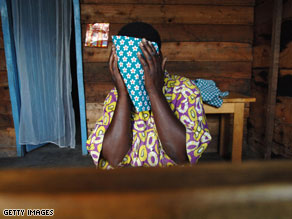
(CNN) -- Eve Ensler can't find the right words to describe what she's seen and heard.Read more of the article here, and you can view the film below.
"Obscene. Horrible. Out of control...." The activist tosses out a cluster of angry words, trying to describe what is, in some ways, indescribable.
She talks about a woman being gang-raped by 15 soldiers. Some violated with sticks and knives. Cannibalism. She has returned from the Democratic Republic of the Congo, where thousands of women and girls have been systematically raped during a 10-year war that some say has cost more lives than any other war since World War II.
"It's 'femicide,' " Ensler says, using another word to describe the treatment of Congolese women. "It's the systematic destruction of women. It's an economic war fought on the bodies of women. It's the destruction of the Congolese people and life itself."
Ensler and others are trying to stop the gruesome attacks against women by launching a series of campaigns that pivot on what Ensler says is a debatable premise -- people will care what happens to dark-skinned Africans.
The centerpiece of Ensler's campaign is "The City of Joy," an all-female village in Congo where rape victims can recover from their physical and psychological wounds. Other groups such as UNICEF have mounted similar efforts to empower Congolese women and encourage the world to act.
Khifadh (clitoridectomy) in Egypt
(Thank you Cassandra for this link)
The following link takes you to a video from Youtube where you can view a debate between two Islam scholars from Egypt. Dr. Malika Zarrar, a woman, argues that no matter what, circumcision is brutal. On the other hand, the scholar from Al-Azhar University (one of the leading Islamic institutions in the world), Dr. Muhammad Wahdan, argues with her for circumcision. His argument is that if the clitoris is too long, then it will excite the girl. It was also beneficial in preserving chastity and honor.
Interestingly, the interview was conducted in 2006, and aired in Kuwait. Last year Muslim scholars from all over the world met for a week to debate this issue, and they came up with the admonishment that female circumcision was not only not Islamic, but that it was, in fact, anti-Islamic. That was a very powerful statement. Unfortunately, it doesn't seem to have had much impact.
Anyhow... here's the video: http://www.youtube.com/watch?v=rUvrHsPaTSo
Wednesday, October 15, 2008
Birth control methods
In preparation of our Thursday class, please take a look at the following site from Planned Parenthood on Birth Control methods available.
Read about Norplant from the Population Council - one of its original developers.
An article from the ACLU entitled Norplant: A New Contraceptive with the Potential for Abuse
Incidentally, Norplant has been discontinued in the US since 1996, but is still used in other developing countries like Bengladesh.
Abortion: The World Health Organization "Preventing unsafe abortions" site has some statistics about abortion related deaths around the world.
The debate tonight

In the meantime, if you want to read more about each candidate's stance and voting record on particular issues, CNN has a pretty good page where you can do a side-by-side comparison: CNN Election Center 2008
More specifically to our class, the Kaiser Permanente site is one of the best out there about health issues. Click here for more information. You can choose specific issues like women's health, and global health care, and view each candidate's plan.
Tuesday, October 14, 2008
Maternal mortality in Sierra Leone
(Thank you Cassandra for sending this story)
From the Washington Post:
A Mother's Final Look at Life: In Impoverished Sierra Leone, Childbirth Carries Deadly Odds
Maternal mortality in Sierra Leone is one of the highest in Africa. For those of you who have watched the film Blood Diamond, you might remember that the country has experienced extreme poverty, ethnic conflict, and a civil war, which was made worse by the diamond industry.
The story recounts some women's experiences with trying to deliver where access to modern technology, trained physicians and health care professionals, and to hospitals is severely limited or non-existent. Ophtamologists, and poorly trained midwives are the only personnel who can provide any obstetrics care to the women.
UNICEF, CARE, and Catholic Charities have collaborated to fund 54 public health clinics staffed by one nurse each, around the country. Patients are indeed expected to pay for the services they receive, the drugs, and supplies, at the tune of $10 per vaginal delivery, and $70 for C-section. The article notes that:
Patients must pay for all the drugs and medical supplies used in the hospital, in addition to fees for delivery -- about $10 for a regular deliver, and $70 or more for a C-section. Some operations are delayed while husbands run out to buy rubber gloves for the surgeon.
Moreover, the clinics are not open 24 hours per day, so that when women go into labor, they must wait for the clinic to open. This makes complications all the more dangerous for the women and their babies.
"I'm worried about how I am going to pay this bill," said Barrie, 32, who said he earns less than $100 a month making jewelry in a local market.
This is another one of those examples where structural barriers directly impact women's health, and can, in extreme cases, be fatal.
The article has a very touching slideshow, which you can view by clicking on this link.
Here is the video that accompanies the article.
Subscribe to:
Posts (Atom)
